How Dutchland Foods Uses Lean Principles to Reduce Waste
We are constantly looking for ways to improve our systems and quality at Dutchland Foods. Recently, we launched a new initiative to do just that, a Lean Initiative. We are making small, mindful improvements in our everyday routines that will make a big impact. To get a behind-the-scenes look at what this means for our team, we had a chat with Nathan Warner, Human Resources Manager at Dutchland Foods. Let’s take a look at his insights into the program.
What is the “Lean” Initiative?
Lean thinking focuses on minimizing waste while maximizing value for the customer. By adopting the principles of Lean thinking, we empower our teams to perform at their best through continuous improvement. We have adopted principles from Lean thinking into our processes at Dutchland Foods with the goal of maximizing customer satisfaction and reducing waste.
What does the Lean Initiative mean to a business like Dutchland Foods?
“Lean means everything to a business when it is fully applied in every aspect of operations. It means that when a mistake is made, we ‘attack’ the process and find ways to prevent recurrence. Lean means getting our heads together and coming up with ways to make work easier and more efficient. It means teaching and training your people on the importance of quality and what the customer expects. It means a persistent pursuit of daily continuous improvement… even if it’s just 2 seconds each day. Lean means happier employees and more satisfied customers.”
Eliminating The Eight Wastes
Eighty years ago, Toyota developed a list of eight wastes in its car manufacturing process and then trained its employees to eliminate or reduce each one. Today, Dutchland Foods is applying those same principles to identify and remove waste from our own production facility.
Overproduction: Overpurchasing supplies and overproducing products lead to excess inventory, increasing storage costs. Reducing excess inventory directly saves money and resources on purchasing, storing, and moving it.
Transportation & Motion: Transportation is the movement of things, and motion is the movement of people. Efficient movement of goods and reduced physical steps during production save hours and energy every day.
Inventory & Overprocessing: Holding more than what is needed is considered excess waste. In addition to the goal of reducing overprocessing, we are working to eliminate work beyond what is strictly necessary for the task at hand.
Defects & Waiting: Making products right the first time reduces physical defects, resulting in less scrapped dough. Closely monitoring production prevents stoppages and delays, keeping internal and external waiting times as short as possible.
Skills: The biggest waste in every organization is the untapped potential of its employees. We’re actively seeking feedback from employees so they can share suggestions on how we can eliminate waste and help them perform their jobs more efficiently.
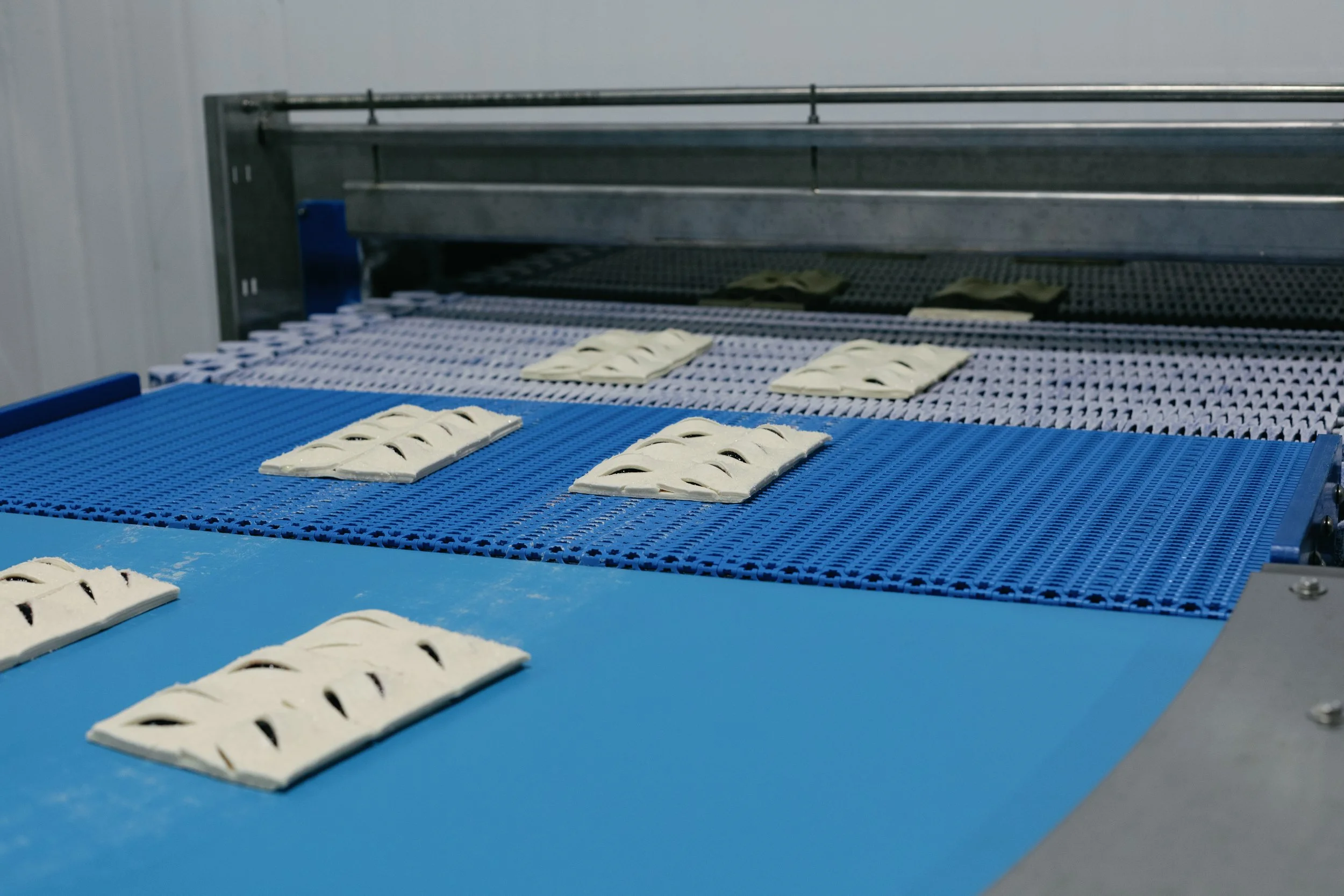
Benefiting the Company, the Environment, and the Customer
When waste is reduced, the company, the environment, and the customer all benefit. As a company, we hope to see increased workplace satisfaction as our employees work as efficiently as possible and feel more fulfilled. We have goals to reduce excess materials going to waste, which will lead to lower costs and less dough going into the landfill. At the end of the day, the customer will see incredible benefits. Our Lean Initiative will ensure our customers receive the best quality products without unnecessary delays. We look forward to seeing how the hard work put in by our team pays off.
What are the benefits of reducing waste for a company and the environment? Who benefits from the initiative?
“The benefits of Lean are beyond measure. At its core, Lean is about reducing waste and making improvements to processes relentlessly every day. This continuous improvement culture benefits the internal customers (the employees) and the external customers (the people buying our products). Employees feel empowered when they can improve the work and processes they are carrying out. Customers’ trust in your company goes off the charts when they see your dedication to providing the very best products possible. Everyone benefits from Lean!”
Continuous Improvement Takes Training
Workplace waste goes beyond dough scraps. While our team already does an excellent job of producing quality pastries efficiently, we have implemented targeted training to foster a mindset of continuous improvement. Even small improvements to our routine across the board make a huge difference in reducing workplace waste. Currently, Dutchland Foods is collecting employee feedback to identify areas for improvement. Those suggestions will be implemented and shared company-wide so we can all make progress together.
What training is provided to employees to reduce waste?
“Dutchland Foods is just beginning on the Lean journey. We are using morning meetings and informative company newsletters to help educate our entire organization. We are still trying to discover ways to teach and train our people on the importance of seeing waste and the reduction of it.”
More Than Just Waste Reduction
Implementing Lean principles is just one part of our continuous commitment to everyday excellence. At Dutchland Foods, our dedication to improvement goes beyond the factory. While the Lean Initiative is a powerful tool for reducing waste, it works toward a larger goal: fostering a workplace where each team member is encouraged to innovate. Whether we are refining production processes or reorganizing a workstation, this mindset will ensure we deliver our best every day. We are confident this initiative will help build a sustainable future for our company, our community, and the customers who rely on us.
How does the Lean Initiative harmonize with the culture at Dutchland Foods?
“Dutchland Foods strives to produce high-quality pastries every day. Their aim is to exceed customers’ expectations and provide a place to work where employees feel valued and can grow. The Lean Initiative bolsters Dutchland’s culture and enhances how we work and communicate.”